About
Altar_1.2 - Statement and documentation
Altar_1.2 - Statement and documentation
Altar 1.2 is an artistic research project that explores consciousness through interactivity and non-linear, associative narrative structures.
In this first work, I chose to engage with the classical pictorial genre of vanitas, a visual tradition that has historically reflected on human experience, time, and consciousness.
The texts presented below are influenced by my readings and by a collection of ideas and perspectives from authors such as Carl Jung, Mark Solms, David Eagleman, Thomas Metzinger, and Ted Nelson, among others.
However, the reflections presented here are my own interpretations and have primarily served as sources of inspiration for my creative process.
Bibliographic references can be found at the end of the document.
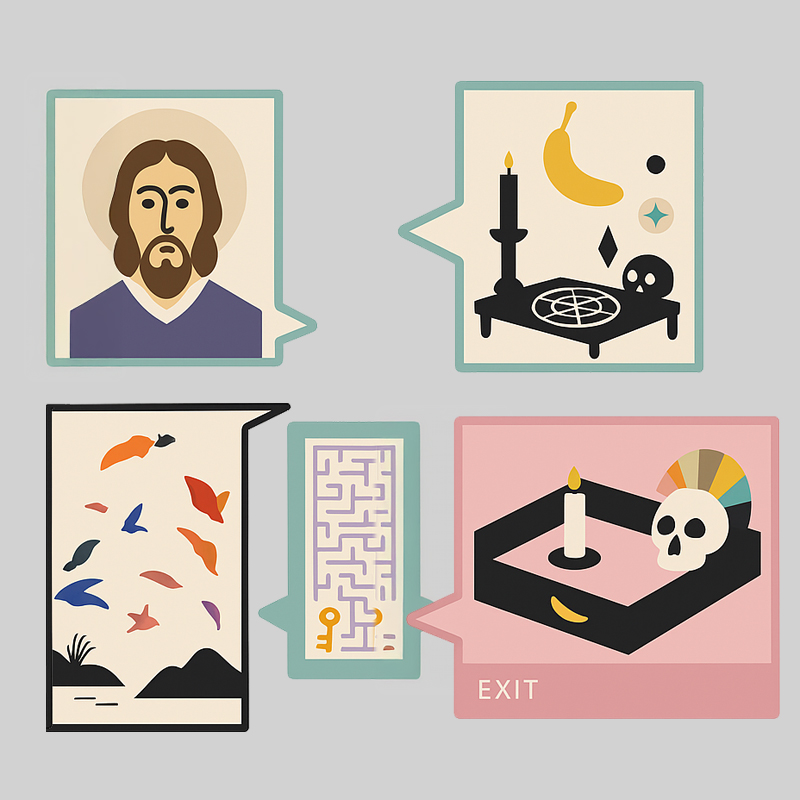
The project explores different modes of interaction as a way to expand the semantic depth of the visual elements and reveal additional layers of meaning. This interaction generates a non-linear narrative that encourages multiple interpretations and personal associations.
The digital display functions as a space for reflecting on consciousness. Through its non-linear structure, users can encounter unexpected connections and unusual juxtapositions that echo the shifting relationship between conscious and unconscious thought.
My objective is to establish a dialogue between these images and create a multi-layered net of meanings in which the user can navigate and, ideally, immerse themselves.
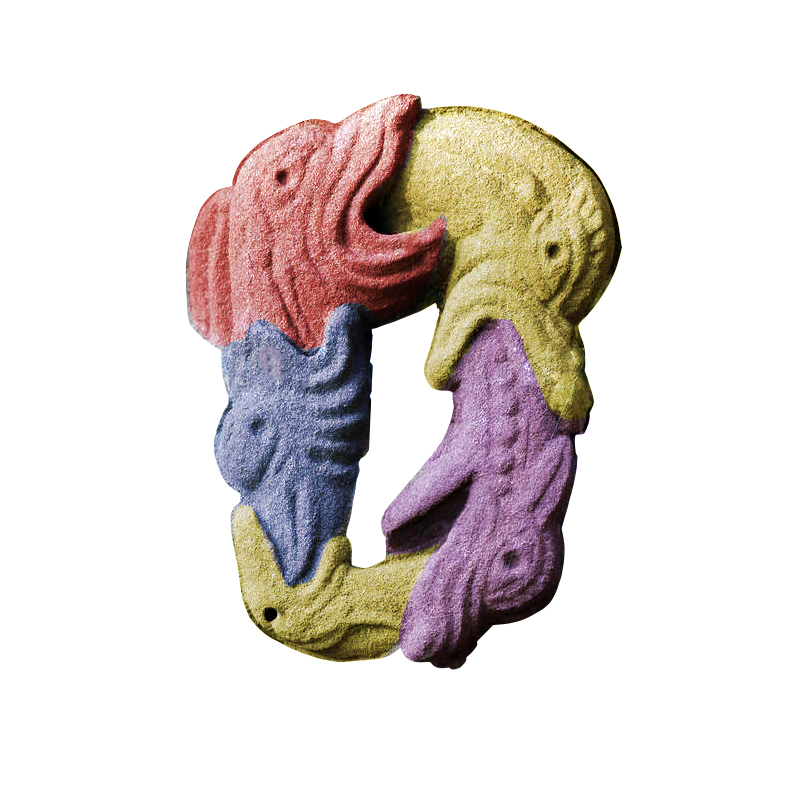
The reading or interpretation of this work is open-ended; it does not propose a fixed meaning, nor does it establish that one element must strictly represent something else. The viewer is free to form their own associations and construct their own narrative.
Nevertheless, I consider it important to share some of my personal references, the stories from which certain ideas emerge, and a few general reflections on my working process.
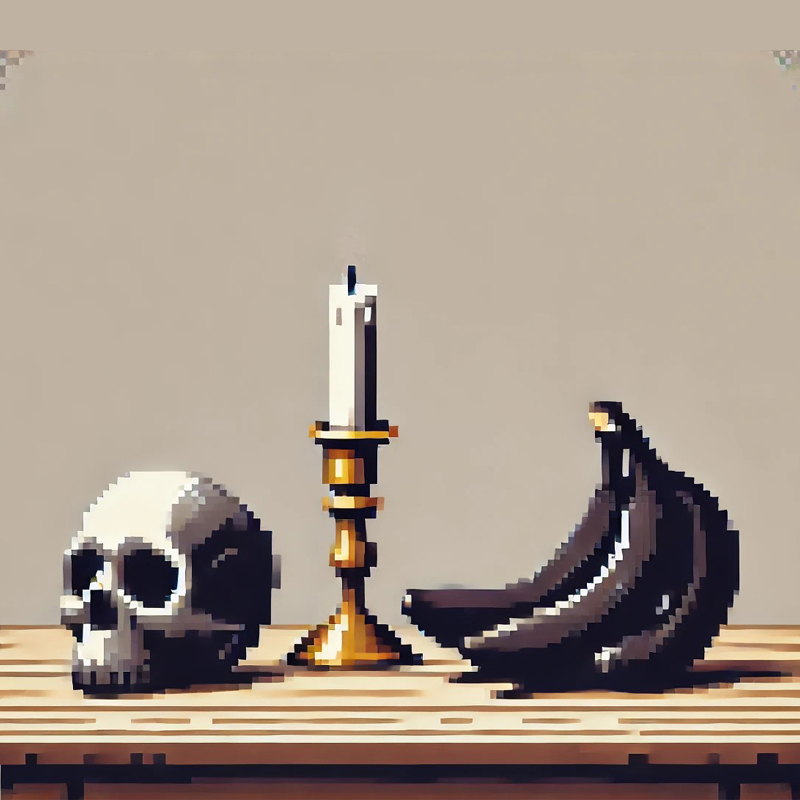
An altar, in general terms, is a symbolic staging. The objects placed on it are charged with meaning and allow us to connect with memories, ideas, or principles of life. They function as an interface that gives access to thoughts and experiences that go beyond words.
The altar brings together and connects different moments, spaces, and times.
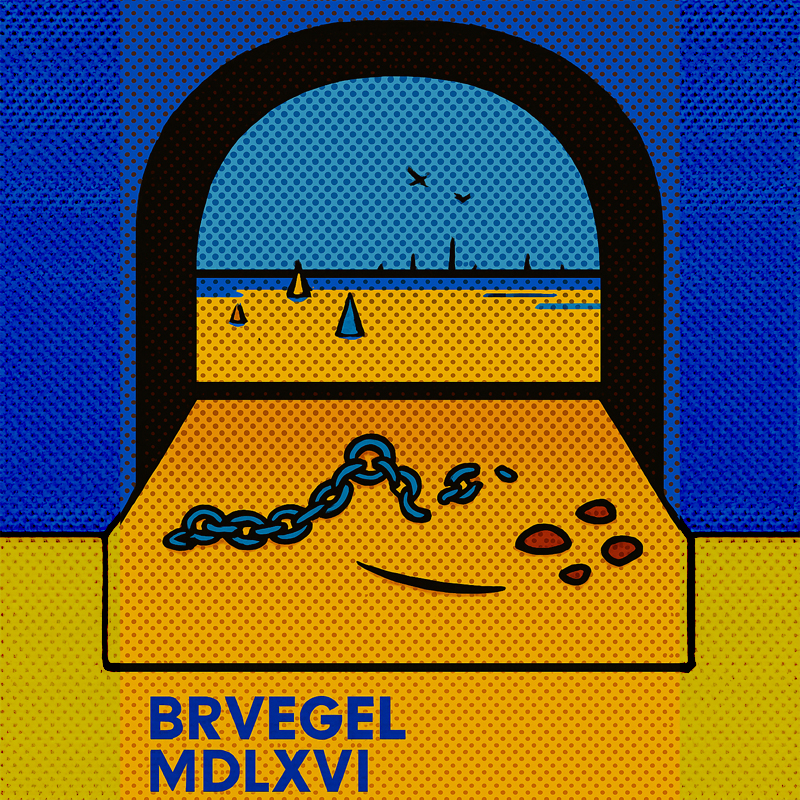
Because of the nested nature of representation explored in this work, I wanted to create an image within an image and, at the same time, to reference a painting that personally intrigues and fascinates me. During the process, I often thought about the two chained monkeys, sad and bored, set in strong contrast with the harbor landscape unfolding behind them: the sea, the clouds, and the birds in flight.
Two exotic monkeys in chains bear witness to a colonial world in which encounters and clashes between cultures were beginning to accelerate. It is a moment frozen in time in mid-sixteenth-century Antwerp.
Building on this reference, I wanted to create a new layer of meaning: to symbolically free the monkeys and to emphasize their absence. At the same time, the gaze of the monkey placed at the top of the composition follows the movement of the cursor. My intention is to reverse the direction of the gaze: what we look at can also look back at us.
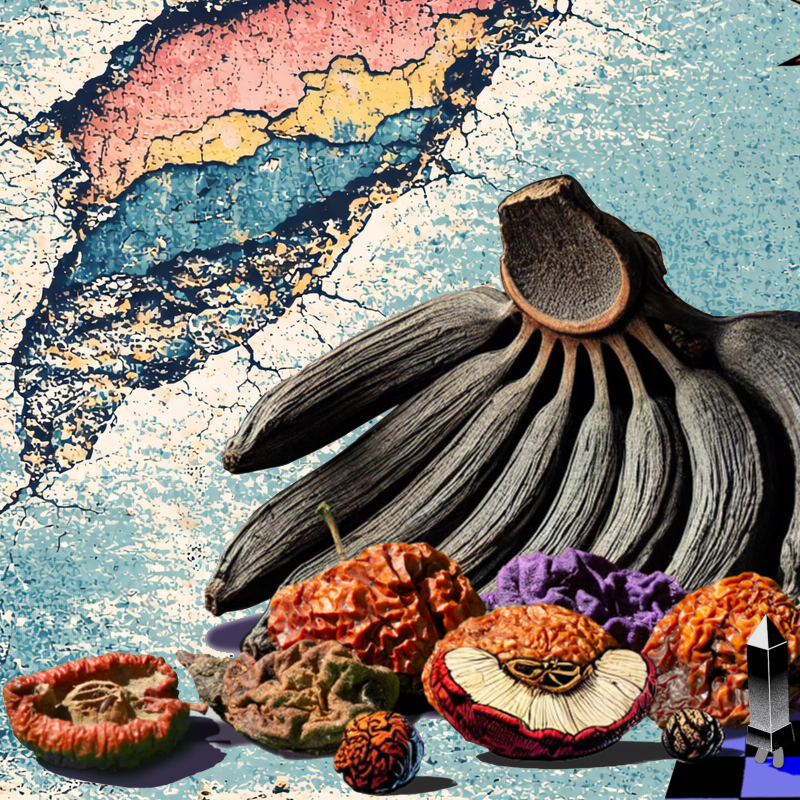
In the overall appearance of the scene, I wanted the objects to be visibly marked by the passage of time. For this reason, the wall with its exposed layers of paint, the worn table, and the rotting fruit evoke the action of time and the effects of entropy on matter.
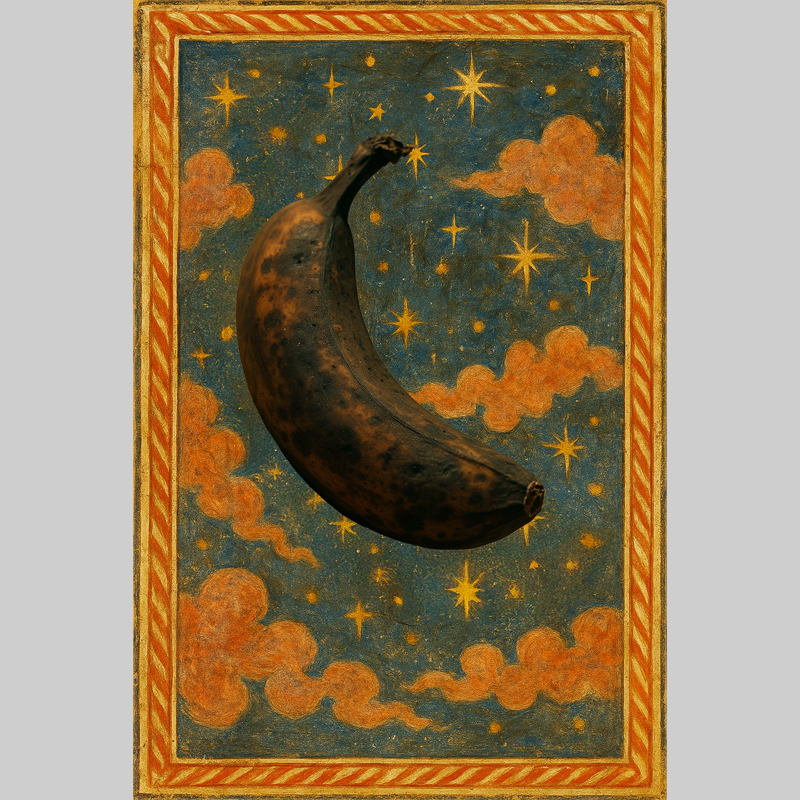
In the rotten fruit, I created two associations, that is, two layers of meaning.
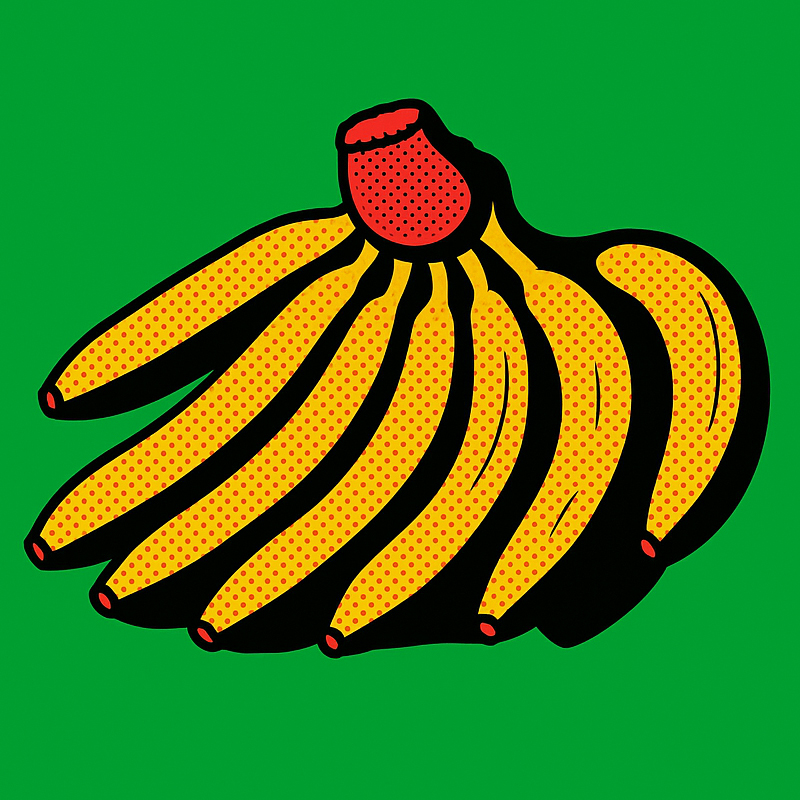
The first is activated through a hover interaction and opens a scene that suggests a “pop art” dimension, where flies appear. The color and halftone dot pattern contrast with the base image. It suggests a place that might smell bad, rotten. In the background, the two monkeys appear as spherical forms, colliding with the boundaries of the representation, as if trying to escape from it.
The second association appears as a pop-up window, in which we see a Pantocrator (a Romanesque representation of God) portrayed as a cook. He proposes a recipe to reuse rotten bananas and create an “ouroboros cake.” The Master Chef also reflects on life after death and on the origin of the sacred.
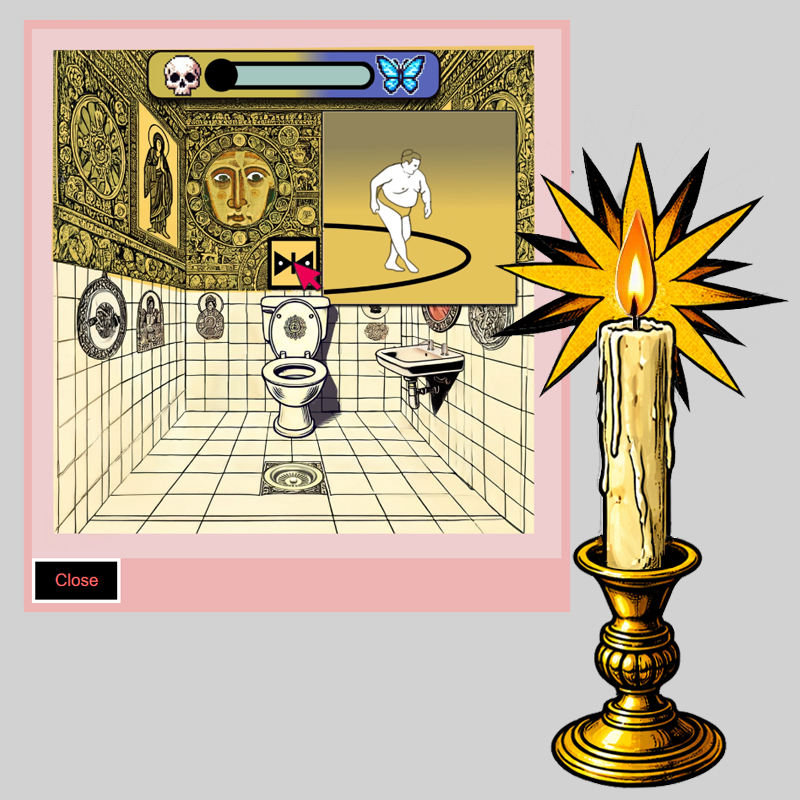
The candle is one of the classic symbols of the vanitas genre. It represents light and knowledge, but also the fragility of life: at any moment, that light can be extinguished.
I have expanded its symbolic meaning through a pop-up window that opens onto a space divided into two complementary and opposing realms. In fact, the initial idea for this altar originated with this image.
The upper part presents the sacred space: eternal and unchanging. The lower part reveals the profane space: mutable, exposed to time and to entropy. Before deciding to work with a vanitas image, my interest was already focused on this very opposition. The objects placed below are subject to decay; for this reason, the tiles evoke a bathroom, a place associated with bodily waste. Above, by contrast, the space is transformed into a sacred realm, outside of time.
In the pop-up window, another virtual user appears, manipulating time back and forth. The user then activates a button that opens a new scene: a sumo wrestler confronts an invisible force. The fight follows a principle of kung fu: rather than opposing force with force, the wrestler redirects the opponent’s energy and uses its own weight and momentum to push it out of the circle.
On the sound level, a celestial bell-like sound is juxtaposed with a sound that evokes degradation and decomposition.
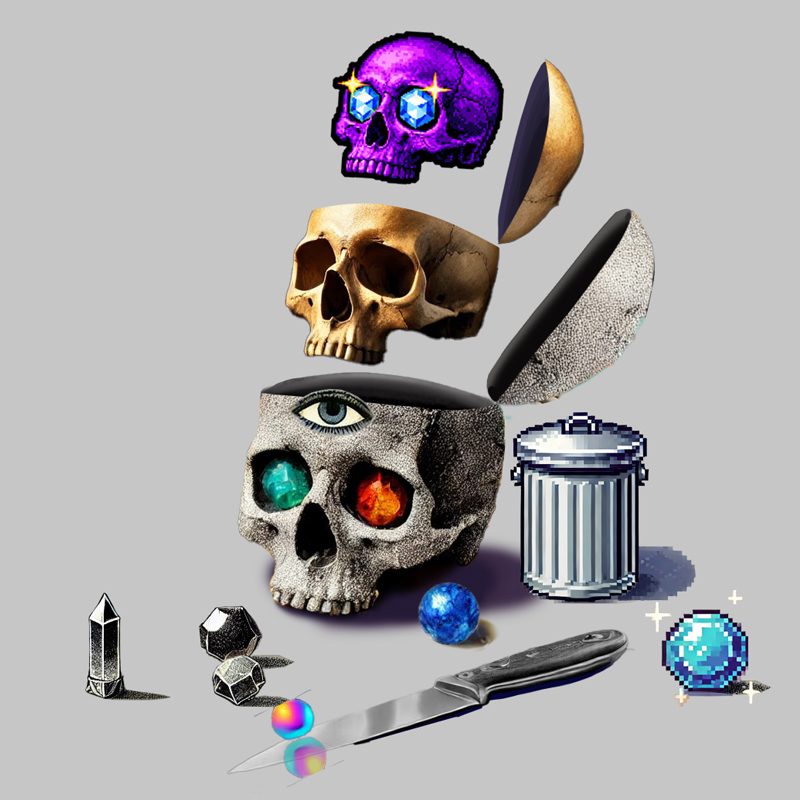
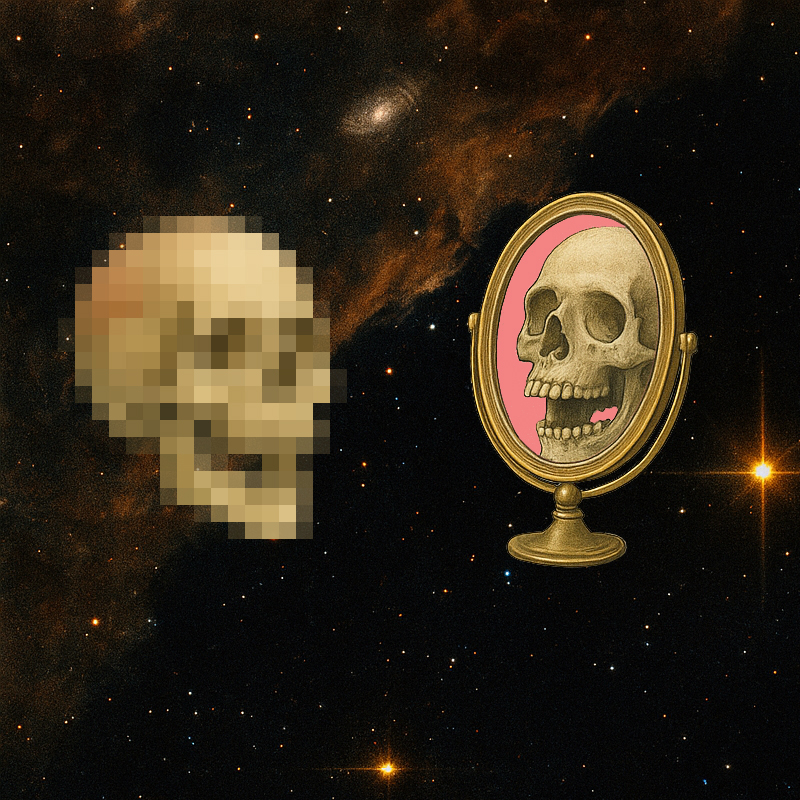
The knife refers to an object that exists at an edge, yet remains in balance. By hovering over the sphere, an animation is activated in which a sequence of skulls appears, each rendered in a different way. It is as if someone were searching for the correct signal frequency, or adjusting a dial in order to perceive the same reality through different filters.
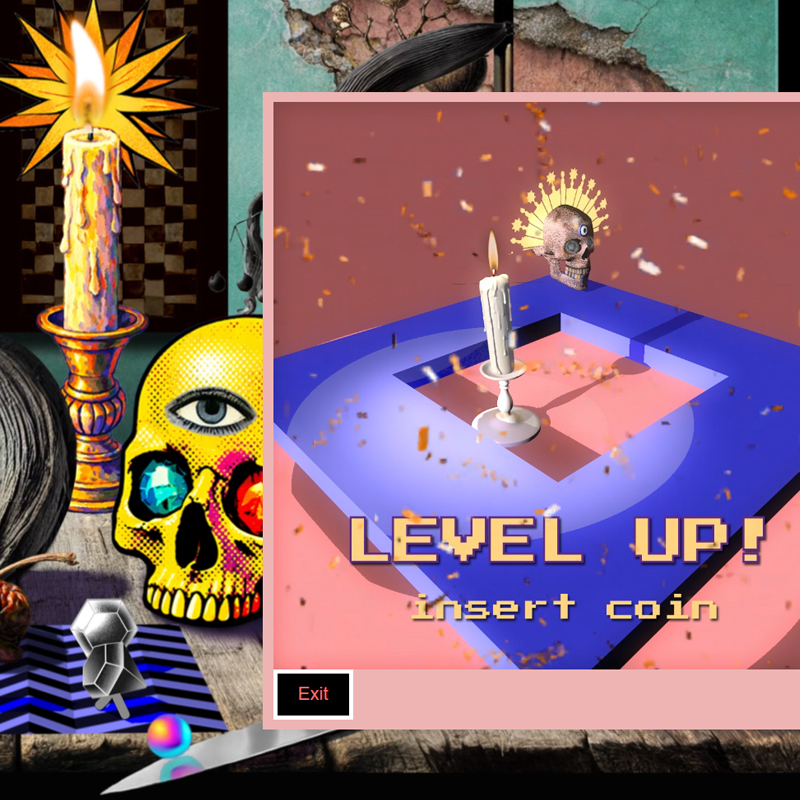
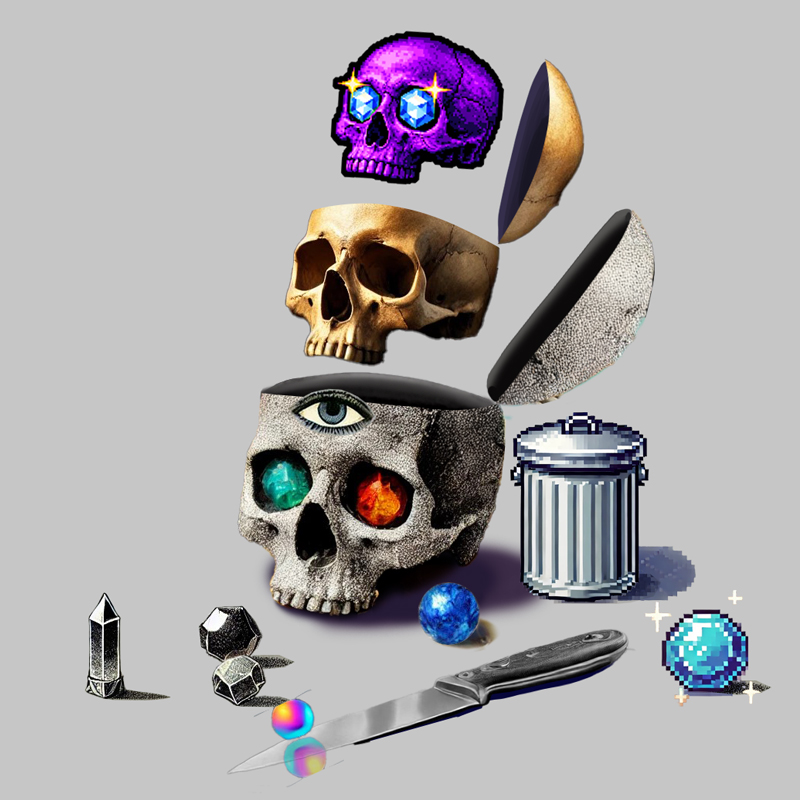
The skull is another classic element of the vanitas genre. Here it functions as a symbol of the self, an impersonal being, the space in which the mind, memory, and the brain reside.
The third eye, located on the prefrontal cortex, suggests wisdom and an expanded form of vision. When interacting with it, a window opens showing a skull wearing a headdress, suggesting a sacred figure, eating rotten bananas. The scene unfolds in a loop in which, on each cycle, the character, referencing the video game Pacman, is rewarded and supposedly levels up.
However, it is unclear to which level the character has progressed. The setting remains the same, and the sense of advancement is revealed as an illusion. This illusion refers to mental mechanisms related to dependency and addiction, linked to reward dynamics and dopamine. The sacred skull must pass through a labyrinth in order to escape this vicious circle.
This is one of the themes staged in the work: the idea of an internal battle unfolding in the mind (prefrontal cortex versus amygdala). Later, in Section 6, you can read more about this issue.
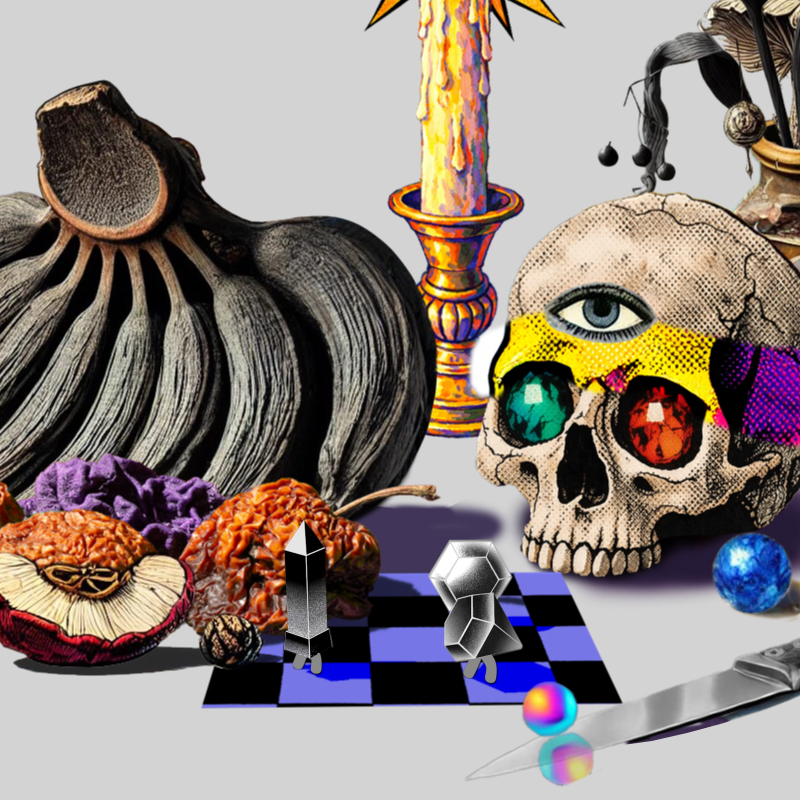
The gemstones on the table create a contrast with the rotten fruit. They oppose matter that is changing and in a process of decay to matter with very low entropy, almost unalterable, remaining intact and changing only on another temporal scale: deep time, which is imperceptible to us.
This idea inspired the animation of the walking gems: “I have learned to move in order to keep appearing still.” When the gems appear to walk, what actually moves is the background. The table opens up and reveals a moving matrix beneath, a hidden underlying layer that is possibly always in motion, but whose movement usually remains hidden.
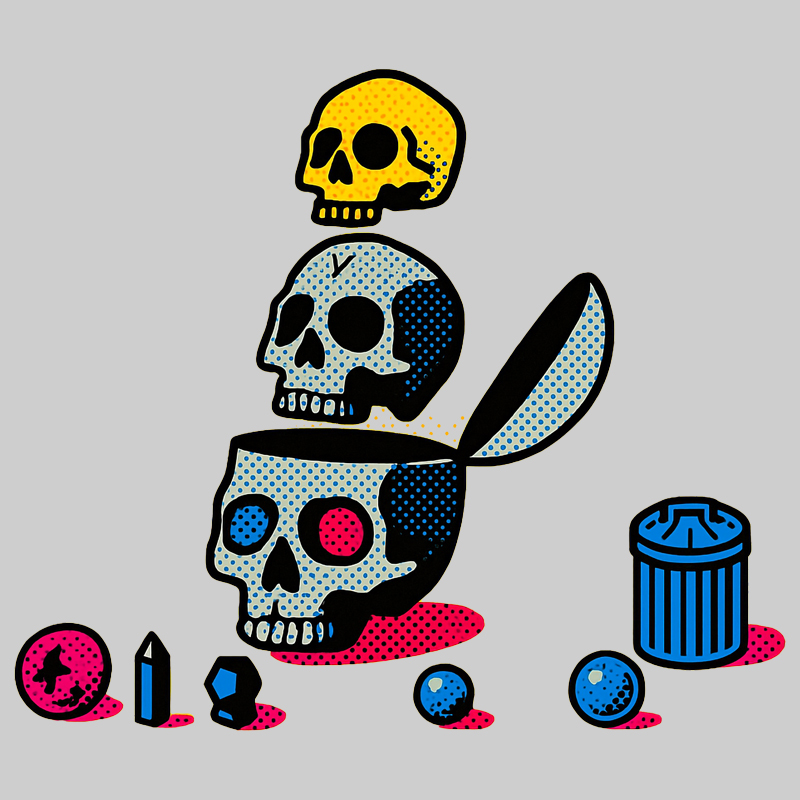
In my work, I explore representation as a dynamic process that plays a central role in both consciousness and cultural expression. Throughout the historical evolution of media, representations have never existed in isolation; they are always embedded within networks of previous images, symbols, texts, and experiences. In this sense, representation is not a passive reflection of the world, but an active interface through which consciousness is formed, interpreted, and continuously transformed.
The nested structure of representations, where images refer back to other images and meanings accumulate recursively, mirrors the brain’s own mechanisms of self-modeling and internal simulation. From this perspective, consciousness does not emerge solely as a biological process, but also as a mediated and cultural phenomenon.
For me, Altar 1.2 functions as a metaphor for the mind: a space for the recombination of internal representations, a kind of collage in which different textures, layers, styles, levels of detail, and ways of “rendering” reality coexist.
By triggering variations of the image through simple interactions, my intention is to invite users to reflect on different ways of rendering reality, revealing a world that is perhaps more mental, more interior, than it first appears.
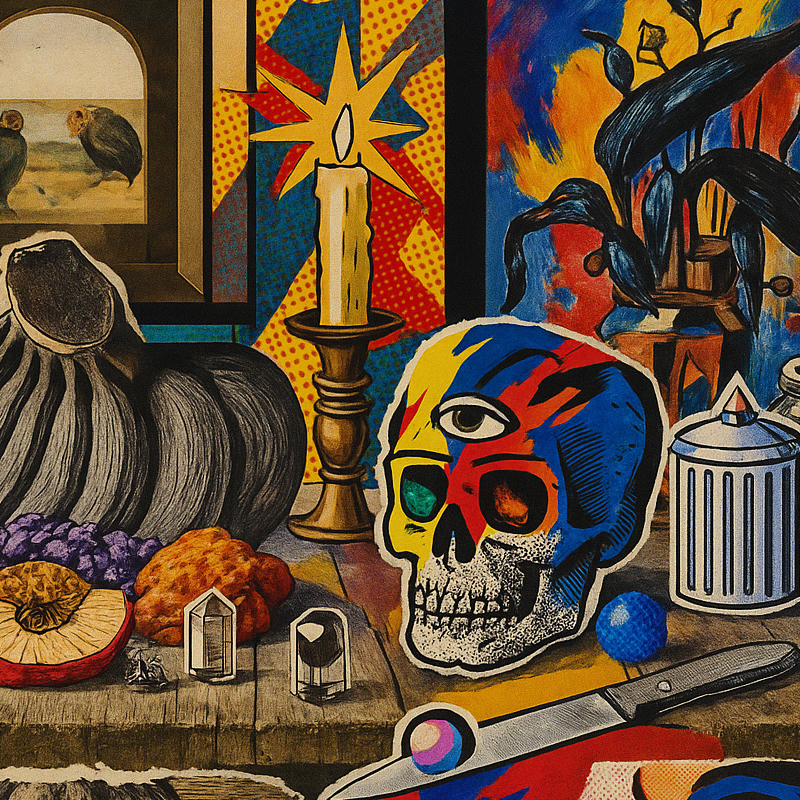
In the digital domain, rendering is the process of generating a perceptible output from a set of inputs. A computer takes raw data, such as code, coordinates, or parameters, and transforms it into an image or an experience that can be understood by a human observer. More generally, to render means to translate information from one state into another.
In 3D graphics, a renderer converts mathematical descriptions of geometry, light, and space into a coherent visual image. Our brain does the same with "raw" sensory data. We do not directly perceive light or sound: the retina converts photons into electrical signals, and the cochlea transforms vibrations into neural impulses. The brain then renders this noisy and incomplete data into a stable perceptual world, with depth, color, continuity, and object permanence.
According to research conducted by Thomas Metzinger, our brain, rather than acting as a passive recording device, functions as an active rendering system. It fills in missing information, compensates for perceptual blind spots, and predicts what is about to happen in order to maintain a continuous and synchronized experience of reality. This internal simulation is built through layered processes, in which raw sensory signals are progressively transformed into edges, shapes, objects, and finally into complex concepts. We do not experience raw data; we inhabit a multi-layered mental model, a real-time simulation of the world. We live in the brain’s real-time simulation of the world.
Our brain always works with partial information and with different degrees of knowledge about the world. Some things are represented in a relatively accurate way, while others, when information is scarce or incomplete, are simplified and/or shaped by stereotypes. In this sense, the brain’s “renders” resemble a cubist collage, full of discontinuities, missing pieces, and multiple simultaneous points of view.
This idea has been one of the central principles guiding my creative process in the work Altar.
Vanitas images have been a way of exploring consciousness. Vanitas stage the act of reflecting upon experience itself. They comment on vanity, death, or wealth; they are inquiries into the mind that contemplates these things, invitations into an aesthetic of inner life. They explore the conditions and limits of consciousness: its awareness of time, its fragile sense of self, its quest for meaning, and its inevitable confrontation with finitude. In this sense, Vanitas is about the mind that contemplates vanity, a mind caught between the material and the eternal.
The memento mori aspect of Vanitas can be seen as an invitation to metacognition: thinking about thinking. By layering symbols that refer to the futility of pleasure, the certainty of death, and the emptiness of ambition, Vanitas paintings ask the viewer not just to look, but to examine their own thoughts and beliefs about life’s meaning.
In physics, entropy refers to the natural tendency of all systems toward disorder and energy dissipation. Life, on the other hand, exists only because it continuously resists that tendency. In a very similar way, our minds are constantly struggling to maintain organization, coherence, and stability in the face of internal and external chaos. This struggle against increasing entropy also takes place inside the brain.(see Robin Carhart-Harris in the bibliographic references).
From this entropic perspective, mental life can be seen as a dynamic balance between forces that generate structure and meaning and forces that push toward disorganization, discharge, and loss of control. This tension mirrors a deeper psychological and symbolic conflict described for more than a century. Sigmund Freud referred to it as the dualism of drives: life drives (Eros) and death drives (Thanatos).
To bridge the gap between poetry and science, we can see that Eros is associated with negentropic processes, those that build structure, connection, and complexity, much like cellular growth. Thanatos, in contrast, aligns with the second law of thermodynamics: the inevitable increase of entropy. While contemporary neuroscience does not use these terms in laboratories, the study of emotional regulation and homeostasis is, at its core, the study of how life struggles to remain organized in the face of the natural pull toward disorder.
This struggle is not merely theoretical; it is hardwired into our biology. Neuroscience often describes this tension through the interaction between the prefrontal cortex and the amygdala. The prefrontal cortex supports regulation, planning, and reflective decision-making, while the amygdala plays a central role in processing basic emotions such as fear and aggression. When emotional systems operate without sufficient regulation, they can produce impulsive, reactive, and potentially destructive responses.
Using this neurological framework, the conflicts we experience in everyday life, attachment and detachment, connection and dissolution, growth and stagnation, can be understood as expressions of the same underlying dynamics. They are all manifestations of the friction between our drive to build and our more primitive tendency to return to a state of minimal tension.
This friction becomes visible when we look at the world around us. A major cultural problem emerges because, in most societies, we are taught very little about how to explore, navigate, and relate to our inner world. At the same time, contemporary neoliberal economies produce strikingly contradictory realities: bubbles of excess and overconsumption coexist with organized scarcity. In both contexts we find addiction everywhere, some forms are mild and quietly blend into our habits, while others destroy lives in a very short time.
In some cases, these patterns lead to degradation; in others, they function as survival strategies. We also witness the emergence of a new class of millionaires addicted to money, people who would need several generations to spend their wealth, yet are not seen as addicts, but as "successful." Throughout history, we have observed politicians addicted to power and the slow moral and psychological decay that often accompanies it. Today, new forms of addiction have appeared as direct products of digital culture: addiction to smartphones, screens, video games, and constant stimulation.
All these phenomena share a common denominator: the internal struggle of the brain to regulate impulse. The same energy that sustains life can also undermine it. The same forces that drive creativity can turn into compulsive loops and self-sabotaging behaviors. Everything unfolds within the same dynamic field between organization and entropy.
So the central question becomes: how do we navigate the labyrinth of the mind's driving forces? One of my main motivations while working on Altar 1.2 has been to explore this relationship between conscious reflection and unconscious impulses, the hidden forces that shape and distort human experience. We like to imagine ourselves as rational beings, but in reality, most of what we think and do is guided by unconscious mechanisms. Every second, we are exposed to an overwhelming flow of stimuli; the unconscious mind filters, organizes, and redirects this information without any deliberate effort on our part. It silently shapes the architecture of our thoughts.
However, I do not see this inner conflict as a battle. I prefer to see it as a dance. Although the unconscious governs a large part of our behavior, the goal is not to become completely controlled by it, nor to believe in an absolute and unrealistic form of free will. What truly matters is developing awareness of the different models of the "self" that coexist within us. Recognizing that we are complex constellations of competing impulses can change the way we relate to ourselves and others. It can soften our judgments and cultivate compassion, once we realize that other people's behaviors are shaped by the same invisible forces that shape our own.
Ultimately, it is about learning to dance with the unconscious rather than trying to wrestle it into submission. Paraphrasing Jung, the task is not to fully understand the unconscious, but to integrate it into our conscious life. My most idealistic hope is simple: perhaps we can begin to repair the world by learning to explore the unconscious and, more importantly, by learning to integrate it into our everyday lives.
A tableau vivant (a French expression that literally means “living picture”) is an artistic and performative genre in which real people pose motionless in order to recreate an image, usually inspired by a painting or by a historical, religious, or literary scene. The participants remain completely still with the intention of evoking a fixed image.
In my case, I am interested in making the vanitas image appear almost static, with only subtle animated details, and in activating movement exclusively through user interaction. This structure allows me to explore categories such as the transitory and the permanent, the ephemeral and the enduring, concepts that are closely linked to the pictorial genre of vanitas. The static and the dynamic are not presented as opposites, but as states in constant transformation that continually redefine one another.
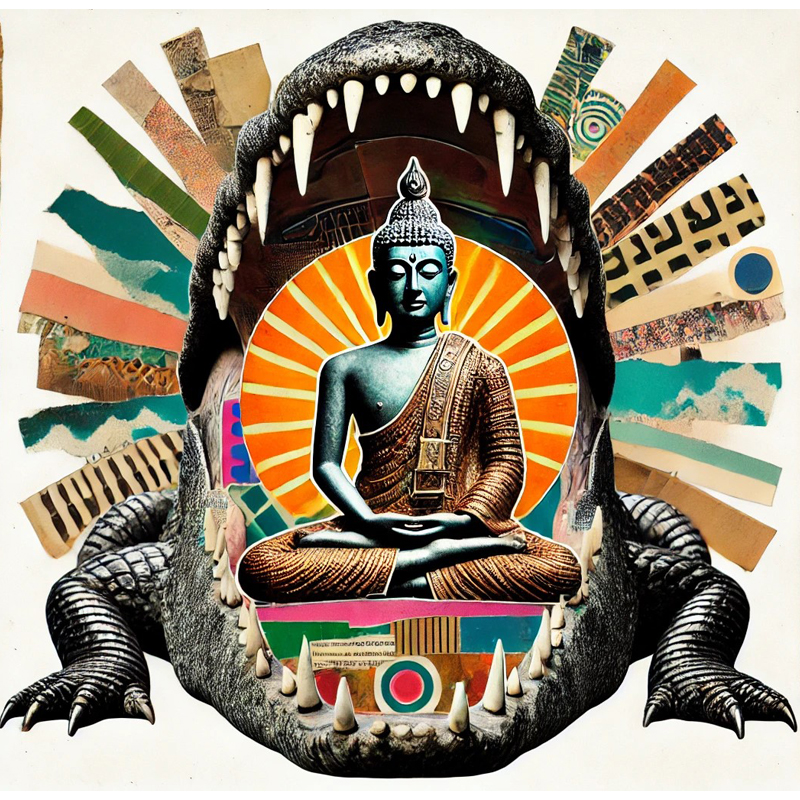
The production process of this tableau vivant was developed in interaction with AI. Overall, 80% of the STATIC images were generated using AI, while the remaining 20% come from my personal archive (photographs and 3D material).
In the case of video and MOVING images, the proportions are reversed: around 20% was generated with AI, while 80% consists of animations created by me using After Effects and TVPaint.
The process began with image generation as a brainstorming tool, however, once I started generating images with AI, the process took a new direction and gradually I integrated more and more AI resources. My interaction with the generated images began to guide the workflow, which consisted of cutting and combining them to build new compositions. The final result is a collage that combines a variety of AI-generated audiovisual fragments.
I tried to apply the same strategy to video generation, but it did not work in the same way. I had very limited control over the results, and the generated videos were largely random. The outcomes were not convincing, and I did not find clear potential for integrating them with the rest of the material.
It has been an interesting and unprecedented production process, shaped by my interaction with AI on different levels. Throughout the project, questions, doubts, critical distancing, new perspectives, and the discovery of new potentials emerged.